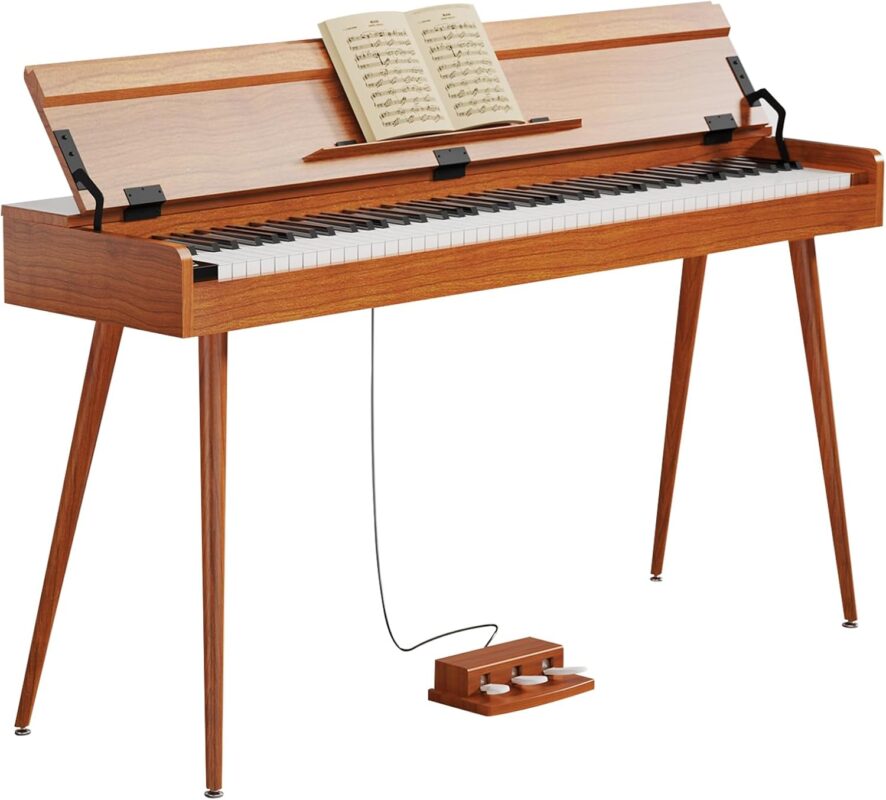
Elevate Your Musical Journey: Why an 88-Key Weighted Digital Piano is the Ultimate Choice for Beginners

Starting your musical journey is an exciting milestone, but choosing the right instrument can feel overwhelming. Walk into any music store or browse online, and you’ll find a dizzying array of keyboards. However, if you are serious about learning the piano, one specific category stands out above the rest: the 88-Key Full-Size Weighted Keyboard with Progressive Hammer Action.Let’s dive into why a digital piano with these exact specifications—complete with essential accessories like a desk stand, sustain pedal, and USB-MIDI capabilities—is the absolute gold standard for beginners.The Power of 88 Keys and Progressive Hammer ActionWhen you’re learning, consistency is everything. Here is why the build of your keyboard matters more than you think.Full-Size 88-Key Layout: A standard acoustic piano has 88 keys. Learning on anything less (like a 61 or 76-key keyboard) means you will eventually run out of room when playing classical pieces, modern pop arrangements, or advanced scales. Starting with a full-size layout ensures you build proper spatial awareness from day one.Progressive Hammer-Action (Weighted Keys): On a traditional acoustic piano, the keys on the lower bass end feel heavier to press than the keys on the higher treble end. Progressive Hammer Action mimics this exact mechanical behavior.Why this matters: If you practice on cheap, unweighted plastic keys, your fingers won’t develop the muscle memory or finger strength needed to play a real piano. Weighted keys bridge that gap perfectly, making the transition to an acoustic piano completely seamless.Everything You Need in One BoxFor a beginner, hunting down individual accessories can be a hassle. A complete digital piano package solves this problem by including the core essentials right out of the box:1. The Integrated Sheet Music Stand & DeskWhether you are reading traditional sheet music or following along with an iPad app like Simply Piano or Yousician, having a sturdy, built-in desk at eye level is crucial for maintaining good posture while you play.2. The Sustain PedalThe sustain pedal (the right pedal on an acoustic piano) allows notes to ring out and blend together, adding depth and emotion to your music. Having one included means you can start practicing proper foot-and-hand coordination early on.3. Quiet Practice with Headphone ModeLet’s be honest: the first few weeks of learning scales and chords aren’t always a masterpiece. Headphone Mode is a lifesaver. It mutes the external speakers and routes the sound entirely to your headphones, allowing you to practice at 2:00 AM or repeat a difficult bar 50 times without waking up your family or neighbors.Future-Proofing with USB-MIDI ConnectivityA digital piano isn’t just an instrument; it’s a powerful tech tool. Thanks to USB-MIDI connectivity, you can plug your keyboard directly into a laptop, tablet, or smartphone.This opens up a massive world of possibilities:Interactive Learning: Connect to music education apps that give you real-time feedback on whether you hit the right note.Music Production: Use your piano as a MIDI controller to record music into software like GarageBand, Ableton, or Logic Pro.Endless Sounds: Trigger virtual instruments on your computer, turning your digital piano into a synth, an organ, or a cinematic string orchestra.