Seeing the Unseen: Why the GT27D Dual-Lens WiFi Thermal Camera Is Built for Serious Diagnostics

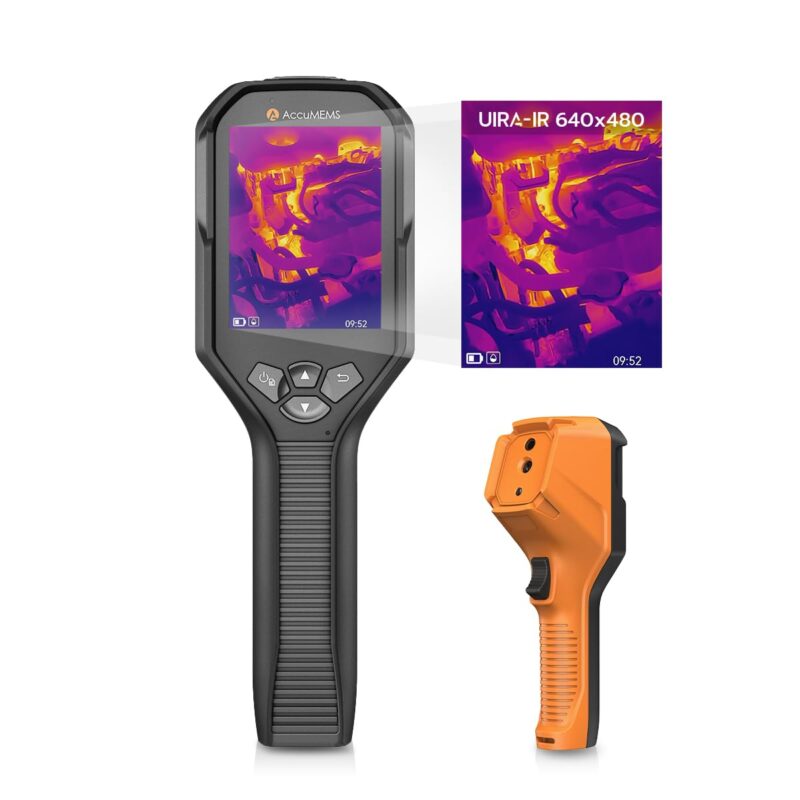
Hidden heat, subtle moisture pockets, and overloaded breakers rarely announce themselves until something expensive breaks. Whether you’re troubleshooting a drafty wall, balancing an HVAC system, or scanning a crowded electrical panel, a handheld imager that pairs sharp thermal detail with visual context turns guesswork into clear action.The GT27D Dual-Lens WiFi Thermal Camera (such as the AccuMEMS GT27D, which pairs a 256×192 infrared detector with UIRA-IR super-resolution processing) brings together high-clarity thermal imaging, a visible-light camera, AI scene assistance, and wireless sharing in a compact kit designed for home, HVAC, and electrical work.
Where It Shines Most1. Electrical DiagnosticsLoose busbars, undersized conductors, and failing relays often heat up well before they trip a breaker or fail completely. A 25Hz refresh rate lets you scan smoothly across panels and connections without choppy lag, while the 640×480 UIRA-IR output and 2MP visual camera help you pinpoint which exact terminal or breaker is running hot—with a ceiling up to 1202°F (650°C) for demanding industrial and mechanical checks. 2. HVAC & Airflow TroubleshootingHVAC issues often hide behind sheet metal and ductwork. With a range starting at -4°F (-20°C) and sensitivity under 40mK, you can check supply vs. return temperature differentials, spot leaky ducts, verify radiator or coil distribution, and catch cold spots that signal restricted airflow or poor balancing.3. Home & Building InspectionsWater intrusion and missing insulation show up as subtle thermal shifts long before drywall stains or mold appear. AI Scene Detection assists in flagging potential moisture, insulation gaps, and temperature anomalies, while dual-lens reference makes it straightforward to show a homeowner or client where an issue is located rather than handing over an abstract heat map. Practical Tips for Better Thermal ScansWatch emissivity and reflections: Shiny metals (like bare copper, aluminum, or polished steel) reflect surrounding heat instead of emitting their true temperature. Use matte tape, high-emissivity paint, or compare relative differences across identical components when possible.Create a thermal delta: Insulation and air-leak checks work best when there’s a noticeable temperature difference between indoors and outdoors (or when HVAC/heating systems are actively running).Use the carrying case: Thermal lenses and sensors are precision optics—keeping the camera protected in its carrying case between jobs prevents scratches, dust buildup, and accidental knocks.